If you own a Victorian terraced house in St Albans or Harpenden, you’re sitting on one of the most coveted property types in Hertfordshire. These homes are rich in character, original cornicing, bay windows, high ceilings, and solid brick construction but they were built for a very different way of living. The good news? With the right extension, you can unlock enormous amounts of space and value without sacrificing any of the charm that makes your home special.
At ACR Build, we’ve been transforming Victorian terraces across St Albans, Harpenden and the wider Hertfordshire area for over two decades. We understand the planning landscape, the conservation area sensitivities, the structural quirks of Victorian brickwork, and most importantly the design ideas that genuinely work for these properties.
In this guide, we walk you through the 10 best home extension ideas for Victorian terraces, covering everything from rear kitchen extensions and loft conversions to basement excavations and heritage-sensitive orangeries.
1. Single-Storey Rear Extension: The Most Popular Victorian Terrace Extension
For most Victorian terraced homes in St Albans and Harpenden, the single-storey rear extension is the first port of call and for good reason. It is the most cost-effective, fastest, and most impactful extension type for these properties.
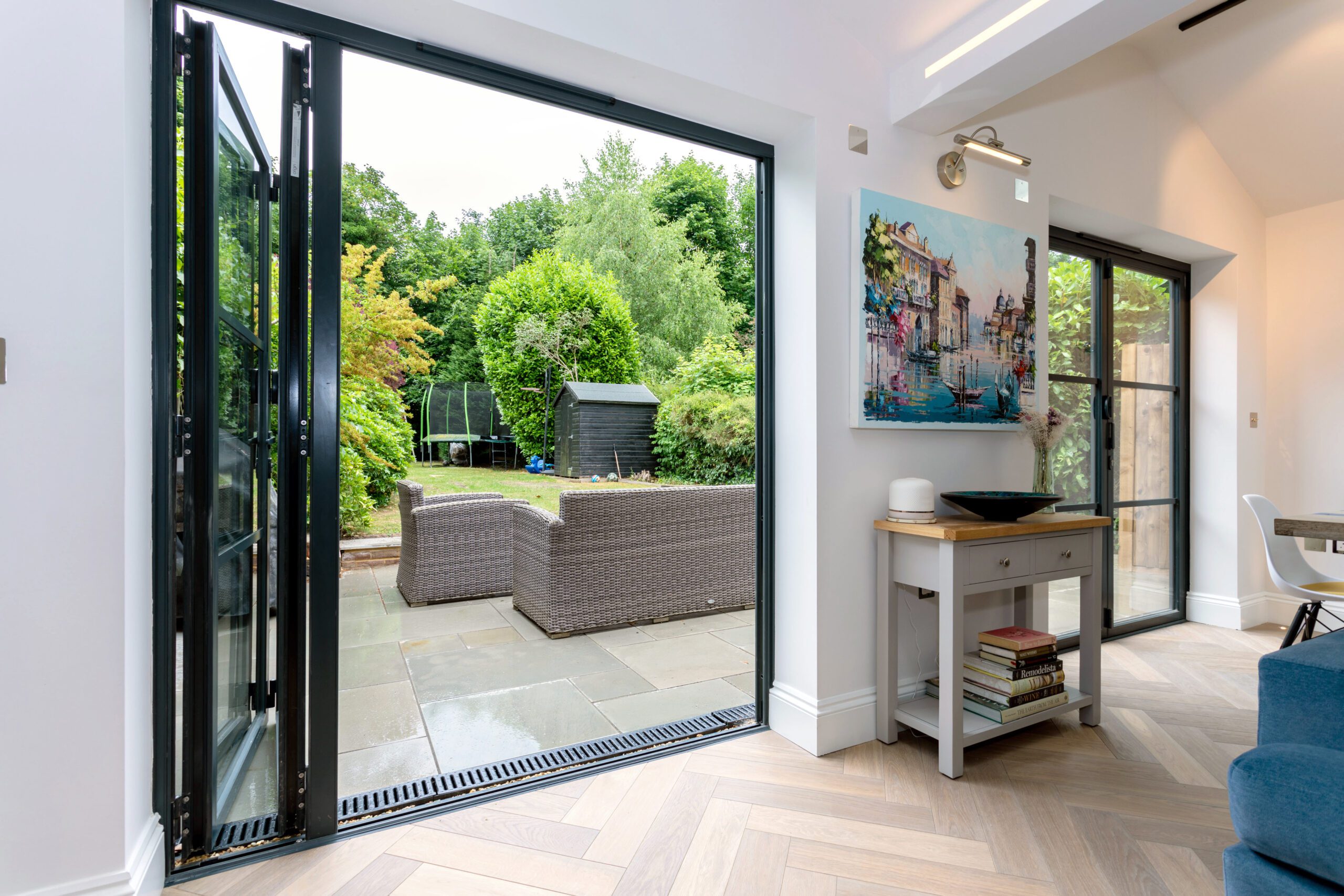
The typical Victorian terrace has a narrow kitchen at the back of the ground floor, often running into a small lean-to or utility. A well-designed rear extension removes this bottleneck entirely, creating a broad, open-plan kitchen-diner-family room flooded with natural light via large bi-fold or sliding glass doors that open onto the garden.
Design Tips for St Albans and Harpenden Victorian Terraces
- Specify large format rooflights alongside rear glazing to prevent the “dark middle” that can occur in deeper extensions.
- Use matching brick or stone facing to complement the original Victorian facade and satisfy local planning sensitivities.
- A flat roof with a lantern or glass box finish is increasingly popular in conservation-adjacent streets — it reads as contemporary without clashing with the period character.
- Underfloor heating works beautifully in these extensions and dramatically improves the comfort of what is often the coldest part of the house.
- Consider structural steel to achieve a fully open-plan layout between the new extension and the original Victorian rear reception room.
Under Permitted Development rights (subject to prior approval in some areas), you can extend a single-storey rear extension by up to 3 metres for a terraced house, or up to 6 metres under the Neighbour Consultation Scheme. Many of our clients in St Albans and Harpenden achieve their ideal open-plan kitchen extension entirely without full planning permission though we always recommend checking with your local planning authority and obtaining a Lawful Development Certificate before committing to the build.
2. Side Return Extension – Unlock Hidden Space at the side of your Terrace
The side return extension is arguably the most transformative extension for a Victorian terrace relative to the floor space added. Almost every Victorian terrace in Harpenden and St Albans has a narrow side alley typically 60cm to 1.5 metres wide that runs alongside the back of the house. Infilling this wasted alley and incorporating it into the kitchen creates a disproportionate boost to both light and space.
The reason side return extensions are so effective is the glazed roof. Because the infilled side return sits to the side rather than the rear, it allows you to install a full-length glass or polycarbonate pitched roof that floods the kitchen with daylight from above. The result is one of the brightest, most inviting kitchen spaces you can achieve in a terraced house without pushing deep into the garden.
Combining Side Return with Rear Extension
The most popular configuration we deliver in St Albans and Harpenden is an L-shaped combined side return and rear extension. This wraps around the back corner of the house, maximising both footprint and light while keeping a good proportion of the garden intact. It typically delivers 15–25 square metres of additional floor space and is widely regarded as the gold standard kitchen extension for Victorian terraces.
In terms of party wall agreements, a side return extension will almost always trigger the Party Wall etc. Act 1996, as the work runs alongside a shared or adjacent boundary. At ACR Build, we guide our clients through the party wall process from start to finish and work constructively with neighbours to keep the project moving smoothly.
3. Loft Conversion – Add a bedroom without touching the garden
Victorian terraces in Harpenden and St Albans were built with generous roof pitches, which means the loft space in most of these properties is both structurally suitable and practically viable for conversion often without any planning permission under Permitted Development rights
A loft conversion is consistently one of the highest-return extensions you can undertake on a Victorian terrace. Adding a bedroom particularly if it includes an en-suite bathroom can increase your property’s value by 15 to 20 per cent in the Hertfordshire market, where demand for four-bedroom family homes significantly outstrips supply
Types of Loft Conversion for Victorian Terraces
- Dormer loft conversion: The most popular option a box-like extension projects from the rear roof slope to create a full-height room with vertical walls. Maximises usable floor area and allows standard-height windows
- Velux / rooflight conversion: The simplest and most affordable option. No structural change to the roofline — ideal when the existing head height is sufficient and planning sensitivity is high
- Hip-to-gable conversion: Most applicable to end-of-terrace properties. The sloping hip end of the roof is replaced with a vertical gable wall, dramatically increasing usable floor space
- Mansard loft conversion: The most ambitious option — the rear roof slope is rebuilt at a near-vertical angle. This requires planning permission but delivers the maximum floor area and is popular in conservation areas of St Albans where dormer extensions may not be permitted at the front.
4. Double Storey Rear Extension – Maximum Space on a Terraced Footprint
When families in St Albans and Harpenden need serious additional floor area a larger kitchen-diner on the ground floor and an extra bedroom or bathroom above the double-storey rear extension delivers the best value per square metre of any extension type.
A double-storey rear extension on a Victorian terrace will require full planning permission (Permitted Development only covers single-storey rear extensions). However, St Albans City and District Council and Dacorum Borough Council (which covers parts of the Harpenden hinterland) have both approved many well-designed double-storey rear extensions on Victorian terraces, provided the proposal is sympathetic in scale and materials to the existing street scene and does not cause unacceptable harm to neighbouring amenity.
Design Considerations
- The upper floor should be set in at least 200mm from the boundary to avoid overshadowing neighbouring properties and to improve planning prospects.
- Matching the original Victorian brick on the ground floor while using a more contemporary material (timber cladding, render, zinc) on the upper floor is a design approach that planners in St Albans often respond positively to.
- Structural design is critical a double-storey extension requires careful load calculations and, in most cases, a structural engineer working alongside your builder.
At ACR Build, our Design and Build service covers the full process architectural drawings, structural engineering, planning application and build making the double-storey rear extension a genuinely manageable project for our clients.
5.Wrap around Extension – The ultimate Kitchen – Diner transformation
The wrap-around extension combines a full-width rear extension with the infilled side return into one seamless L-shaped structure. It is the most ambitious single-storey ground floor extension available to a Victorian terrace owner and, when designed well, produces truly spectacular results.
The open-plan kitchen-diner-family room that a wrap-around extension creates is the most sought-after feature in the St Albans and Harpenden family home market. Estate agents regularly cite open-plan living as the number one driver of buyer premiums in Hertfordshire’s premium postcode zones.
What Makes a Wrap-Around Work Brilliantly
- Full width bifold or sliding doors across the rear elevation opening onto a landscaped garden.
- A glazed pitched roof over the side return section to eliminate any dark zones
- Island kitchen positioned centrally under the full-height rear space
- Polished concrete, large-format porcelain or engineered oak underfoot, heated by underfloor heating throughout
- The original Victorian reception rooms retained and redecorated to provide a formal dining room and quiet sitting room the best of both worlds
6. Basement % Cellar Conversion -Excavating value below ground
Many Victorian terraces in St Albans and Harpenden either have an existing cellar or are structurally suited to basement excavation. As the most premium extension type, a basement conversion creates entirely new living space without altering the external footprint or roofline of the property an important consideration in conservation areas.
Basements are particularly well suited to uses that benefit from the consistent temperature and natural quiet: cinema rooms, home gyms, wine cellars, home offices, games rooms and where the ceiling height is sufficient and natural light can be introduced via a lightwell additional bedroom or guest suite accommodation.
Key Considerations for Victorian Terrace Basements
- Structural survey and underpinning assessment are essential before any basement project proceeds on a Victorian terrace.
- Tanking and waterproofing are critical — Victorian foundations were not designed to resist groundwater, and a poor waterproofing specification will cause significant long-term problems.
- A lightwell with a glass pavement or grating brings natural light and ventilation into the basement and significantly improves the feel of the space.
- Party wall awards will be required with adjoining neighbours, as excavation so close to shared foundations is specifically covered by the Party Wall Act.
7. Orangery or Garden Room Extension – Period Elegance meets modern living
For Victorian terrace owners in St Albans and Harpenden who want to bring the garden into the home but in a way that feels sympathetic to the period architecture an orangery or garden room extension is a magnificent choice. Unlike a standard conservatory, a proper orangery is built with a solid brick or masonry base, a substantial roof lantern (rather than a full glazed roof), and internal finishes that feel like a true room of the house.
Modern orangeries are fully insulated, double-glazed and built to current Building Regulations standards meaning they can be used comfortably all year round, unlike older conservatories that bake in summer and freeze in winter. They are particularly well suited to the rear of Victorian terraces, where their classical proportions complement the existing brick elevations beautifully.
For homeowners in St Albans’s Conservation Areas which cover large swathes of the city centre and include many Victorian terrace streets an orangery can be a more planning-friendly option than a contemporary glass box extension, as it references the period aesthetic more directly.
8. Front Porch Extension – First Impression and Practical space
This is the smallest extension on our list but one that is consistently underestimated. A front porch extension on a Victorian terrace in Harpenden or St Albans solves a very real daily problem the absence of a proper entrance lobby while also significantly improving kerb appeal and the first impression your home creates for visitors and potential buyers alike.
A well-designed front porch provides a weatherproof entrance lobby, storage space for shoes, coats and buggies, and can include a utility area with a boot room bench. For period properties, a brick-built porch with a tiled floor and glazed upper sections is a period-appropriate design that complements the existing Victorian facade without detracting from the character of the street.
Note that in conservation areas or Article 4 Direction zones in St Albans, Permitted Development rights for front porches may be removed always confirm with the local planning authority before proceeding.
9. Garden office or studio -The work from home extension
Since 2020, the garden office or studio has become one of the most in-demand home improvement projects in St Albans and Harpenden. With so many professionals commuting to London two or three days a week (St Albans and Harpenden are both on the Thameslink line with a sub-30-minute journey to St Pancras), a high-quality, permanent garden studio has become a genuine selling point in the Hertfordshire property market.
Unlike a flat-packed garden cabin, a properly built garden office is a masonry or timber-frame structure with full insulation, underfloor heating, mains electricity, data cabling, and a high-quality finish that genuinely functions as a place of work and doesn’t look out of place in the gardens of the fine Victorian terraces that line so many of Harpenden and St Albans’s most sought-after streets.
Design and Planning Considerations
- Outbuildings are generally permitted under PD provided they remain single storey, do not cover more than 50% of the garden area, and are no higher than 2.5m at the eaves within 2m of the boundary.
- For a polished look that complements the Victorian house, consider facing the studio in brick or using painted timber weatherboard cladding.
- A garden studio with a separate access from the side of the house rather than through the main garden makes for a much more professional working environment
10. Flat roof extension over an existing outbuilding
Where a Victorian terrace has an existing flat-roofed outbuilding, garage, or lean-to at the rear, there is often an opportunity to build a first-floor extension directly above it adding a bedroom, bathroom, home office or study that sits above the existing footprint and does not reduce the garden
This type of extension is particularly useful in St Albans and Harpenden where rear gardens are prized and maximising indoor space without sacrificing outdoor space is a priority. The structural feasibility will depend on the existing outbuilding’s foundations and walls a survey is always the first step but where the structure is sound, this can be a highly efficient route to additional floor space.
Architecturally, a well-designed first-floor addition over an existing outbuilding can create beautiful rooms with unexpected views over roofscapes and gardens particularly when paired with a Juliet balcony or a full terrace above the existing lower structure.
Planning Permission for Victorian Terrace Extensions in St Albans and Harpenden
Planning permission is one of the most common concerns our clients raise when they first consider a home extension in St Albans or Harpenden. Here is a clear summary of the key planning rules that apply to Victorian terraces in these areas.
Permitted Development Rights
Many extension types on Victorian terraces fall within Permitted Development (PD) rights, which means they do not require a full planning application. Key PD rules for terraced houses in England include a maximum single-storey rear extension of 3 metres (or up to 6 metres under the Neighbour Consultation Scheme), loft dormers not visible from the principal elevation, and outbuildings within specific size limits.
Conservation Areas in St Albans and Harpenden
St Albans has numerous designated Conservation Areas including the City Centre, Marshals wick, and several Victorian suburb areas where Permitted Development rights are significantly curtailed. In these areas, any external changes to a Victorian terrace, including extensions, cladding, and even replacement windows, may require full planning consent. It is essential to check your property’s status before proceeding.
Article 4 Directions
Some streets in both St Albans and Harpenden are subject to Article 4 Directions, which remove Permitted Development rights entirely and require planning consent for changes that would otherwise be permitted. This is particularly relevant for Victorian terraces on historic residential streets.
Building Regulations
Regardless of whether planning permission is required, all structural extensions in St Albans and Harpenden must comply with Building Regulations. At ACR Build, we manage the Building Regulations application and sign-off process on behalf of our clients as part of our standard project delivery.
Frequently Asked Questions
Do I need planning permission for a rear extension on my Victorian terrace in St Albans?
Many single-storey rear extensions on Victorian terraces in St Albans fall under Permitted Development rights, meaning a full planning application may not be required. However, properties in conservation areas, those subject to Article 4 Directions, or listed buildings will require full planning permission. We always recommend obtaining a Lawful Development Certificate to confirm PD status before starting work.
What is the best extension for a Victorian terrace?
For most families in St Albans and Harpenden, the combined rear and side return extension (L-shaped configuration) delivers the best combination of space gained, light created, and value added. For those focused on adding bedrooms without affecting the garden, a loft conversion is consistently excellent value. The right answer depends on your specific property, lifestyle needs and budget.
Will a home extension add value to my Victorian terrace in Harpenden?
Yes, significantly. In high-demand markets like Harpenden and St Albans, a well-designed extension can add 15–25% to your property’s market value. Loft conversions adding a fourth bedroom and open-plan kitchen extensions consistently deliver some of the strongest returns in the Hertfordshire market. The key is quality design and build a poorly executed extension can actually harm value.
How long does a home extension take to build in St Albans or Harpenden?
Build times vary by extension type. A side return infill might take 10–14 weeks on site; a full wrap-around extension 22–36 weeks; a loft conversion 10–16 weeks. Planning and design work typically adds 8–20 weeks to the overall programme, depending on whether planning permission is required and the complexity of the drawings. ACR Build provides a clear programme at the outset of every project.
Can I extend my Victorian terrace if I’m in a conservation area in St Albans?
Yes, but you will almost certainly need full planning permission rather than relying on Permitted Development rights. St Albans City and District Council has approved many extensions in conservation areas where the design is sympathetic to the existing character — appropriate materials, appropriate scale, and a design that clearly understands and respects the period context. ACR Build has extensive experience of conservation area projects across St Albans and can guide you through the process.
Why Choose ACR Build for Your Victorian Terrace Extension?
ACR Build has been transforming Victorian terraces in St Albans and Harpenden for over years. We are a Hertfordshire-based, building company with a track record of delivering high-quality residential extensions that respect the character of period properties while creating genuinely exceptional modern living spaces.
Local expertise: We know the planning landscape, the conservation areas, the ground conditions and the building traditions of Victorian terraces in St Albans and Harpenden intimately
Design and Build service: We can take your project from initial concept through architectural drawings, planning application and full build a genuinely seamless service
Transparent tendering: Our tenders are detailed and comprehensive. We share a budget tracker from day one, so you always know where you stand financially
Award-winning: ACR Build has been recognised as Best of Houzz for Service in 2022, 2023 and 2024 testament to the quality of our client relationships and finished work
Personal approach: Founder Andy Ryder is personally involved in every project.
Whether you’re dreaming of a spectacular open-plan kitchen extension, rear extensions Harpenden, rear extensions Watford St Albans, a peaceful loft bedroom with views over the rooftops of Harpenden, or a carefully designed orangery that frames your garden beautifully ACR Build has the expertise, local knowledge, and passion to make it a reality
Ready to Extend Your Victorian Terrace?
Talk to the team at ACR Build. We’ll visit you in person, understand your vision, and give you an honest, expert view of what’s achievable with no pressure and no obligation.
Follow our social media channels, Facebook, Instagram, Linkedin and YouTube to see the latest developments from our property portfolio.